Tuesday, 4 December 2012

Homework Task

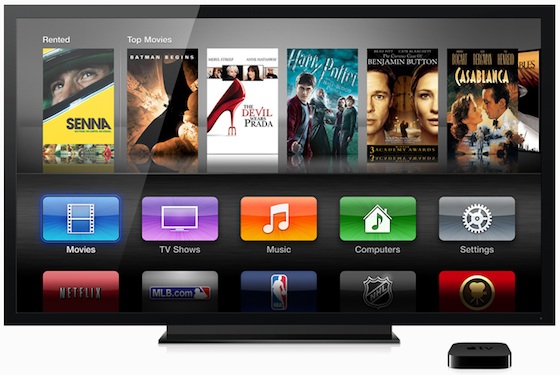
1. Compare an early TV-set from the 1950's with a modern TV from 2012. What are the similarities/differences? 
2. Research three different ways the Xbox Kinect has been 'hacked' and given a new life beyond gaming.
3. Give an example of how new technology has increased the 'production value' of the texts you have studied.

1950's Television-set:

SSPL_10250978_preview
  • Small but very heavy
  • Basic components only - volume
  • 1 Channel only
  • Black and white
  • Box shaped

2012 Television-set:
  • Thin in width 
  • Bigger screen 
  • Hundreds of channels available for free (Free view)
  • More than just a television - books, DVDs, internet 
  • Compatible with other devices 
Similarities and Differences:
  • Both display at least one channel
  • Both are a main source of the news
  • 2012 TV has multiple channels
  • 2012 TV is more advanced in technology - More than a Television
  • Size is completely different - one is shaped like a box. The other is slim and wide.
2.

  • Allows it to be used with a PC rather than the Xbox game console.
  • Schools, art projects and to aid human-robot interaction
  • Becoming multi compatible - Used for a wide range of areas such as a multi-touch interface
3. 
Homeland shows an increase in production value due to the high amount of competition with other platforms. The increase in highly valued stars suggests the production value of even small shows is incredibly high compared to the past. Downton Abbey's setting also suggests a significant change in the production value of media platforms in this current day and age. The huge castle and land would have cost a huge amount to rent for recording and producing. However it suited the genre and made the show feel even more real to the viewer giving a significant amount of reward for the show in increasing the production value.


Defend the view that technology has been either good or bad for the TV industry

The idea that technology has both contributed to positive and negative impacts on the TV industry has been in debate for years. The points I have addressed have made a valuable point on the hypothesis on both sides.
 
The fragmentation that has recently occurred in the audience of television suggests the diversity that technology has had. It is suggested that new technology has actually damaged audiences from before having a family unity all watching the same channel into a separation and becoming more individual. Products such as iPhones, iPads, laptops, 4od and the I Player have all contributed to the point I have made. However at the same time it is suggested that convergence is coming back into the concept of the TV industry. Media platforms will ideas together instead of keeping them separated and individualistic. For example perhaps just one source of media being the iPad. In which this suggests that the idea of this is bad in dividing families.
 
Production value has also significantly changed throughout recent years with the improvement of technology. It was thought to only see big industries such as Hollywood to use special effects such as CGI. However it is now common for these effects and programs to be used on the small screen as well. Homeland is an example where this can be seen. This contributes to the debate of technology having a positive impact on the TV industry.
 
Multi-channel viewing is another point to consider when addressing this hypothesis. It is suggested that TV has been forced to respond to the fragmented 'internet generation.' They came up with channels that suited this targeted audience very clearly with products such as; BBC HD, Channel 4od, E4, ITV Player and More 4. Through this you can now watch a variety of shows whenever you like including shows from other countries suggesting the new technology has made a positive worldwide impact.

In conclusion, fragmentation has suggested that the increase in new technology has affected the media industry in a negative aspect. However other significant factors such as the multi-channel viewing gives off the impression that the new technology has made a significant positive importance for the industry.
 

Thursday, 29 November 2012

"Does strictly come dancing target a mass audience whilst Homeland targets a fragmented audience?"


A Mass audience denotes a section of the media specifically designed to reach a large audience. Eastenders is shown on BBC 1 at 20:00 shows this also with their 8,675,000 views last week. The opposite of this targeted type of audience is named 'fragmented' in which the division of audiences into small groups due to the wide spectrum of media available. The television show; "Storage wars" helps show this with its 165,000 viewers and viewing channel and time being the History channel at 20:59.

Strictly Come Dancing has been suggested to have a mass audience displaying their television show to millions in Britain. Their viewing count last week (11,413,000) shows the huge range of the public that watch it. The channel chosen also adds evidence to the question with BBC One being the suited for a mass audience as well as being the first and main broadcaster in Britain. The date and time scheduled also suggests the targeted audience being mass with the time being 18:31 on a Saturday. This is very specific and strategic with most people either having dinner or watching their television before going out. The show from this will encourage more viewers into watching because of this. The show itself involves a variety of British celebrities that the public are aware of, from this it involves the viewer more making it feel more personal to them.

Homeland on the other hand, has a completely different style of audience that can be seen in a variety of ways. The viewers from last week stand at 3,040,000, a significant difference compared to Strictly Come Dancing. The show is also played on Channel 4 which is very open to U.S. shows compared to other channels. This connotes the fragmented audience that Homeland has because of the narrow selection it is showed on. The schedule also has a significant factor because it is timed at 21:00 on a Sunday. Many people would either be sleeping by this time however a small section of the public choose this time to unwind or watch something whilst they get ready for work on Monday. The genre of the show (political thriller) also fragments the viewer’s even further because of the specific interest needed to watch it. It is also specifically aimed at U.S. citizens in which portray the targeted audience in Britain to be even more of a niche viewing.

In conclusion, Strictly Come Dancing has 8,373,000 more views than Homeland last weekend showing a significant difference in both show's targeted audience. The channel both are showed on different channels which both have separate audiences that watch. Channel four focuses more on cultural and niche types of viewers compared to the BBC who are the national channel and broadcaster. The two shows are completely different as well with Strictly being more of a reality television show compared to Homeland, a fiction drama with American roots. 

Sunday, 25 November 2012

Hartley, Fiske and Homeland's Audience

Hartley identifies 7 groups of identification for audience:
  • Self - Grouped by aspirations
  • Gender - Associated motives by gender
  • Age Group - Stereotypically having different priorities, needs and aims in life
  • Family - Place in family; parent or child?
  • Class - Social classes need different things
  • Nation - The country a group comes from and its style
  • Ethnicity - The ethnic grouping of your audience may play a role in choosing actors or images
This theory breaks down all the components of the targeted audience as well as displaying any differences that could occur.

Fiske identifies the audience in a different perspective compared to Hartley:

  • Education - The level of education could differentiate and affect the audience
  • Religion - Plays a key role, is it aimed at a specific belief? Are the people taking in their belief when reading the text?
  • Political ideology - Different groups have different priorities. Will this affect their decision?
  • Region - Places can be more powerful than others. Fashion for example differs in London compared to Yorkshire.
  • Urban versus Rural - Town versus Country - They have different ways of living and beliefs
Fiske identifies a more deeper research into targeted audience. Small details from the way the audience live can completely change the way they think and interpret a text.

Homeland's Targeted Audience:
?


Friday, 23 November 2012

Episode 2: Audience Positioning

Main focus: Brody
Other focuses: Carrie and Saul
The title sequence - Suggests that Carrie has always aimed on finding the truth in her life. Other significant scenes are the maze in the title sequence. This connotes that she knows something about Brody but she just can't see it.
· The camera angle being at Brody's level with him digging up the grave suggests that we're down at his level and the terrorists at this point are the bad ones. It positions the audience to feel sorry for Brody.
· With Brody with his family in the morning, the camera is lowered and he is presented at the front. This suggests that it wants the audience to see an orthodox family system with him being the leader and protector.
· There is also privileged access to Brody's thoughts and nightmares. This positions the audience extremely close and completely follow the character inside his head. It creates a sense of feeling like he is a victim as well.
· Audience imagining - the process of identification.
· With Brody assaulting his wife in his sleep, the audience is positioned to feel sorry for the family with his struggles being genuinely sorry about the assault.
· In the prison cell, a lowered medium shot is presented with flash backs becoming more frequent in this episode. Dramatic non diegetic music is also playing in these scenes to build a tension.
· Brody chokes the paparazzi- This was a military or terrorist learnt move suggesting what he can be capable of. With the son also seeing him it creates tension between the families.
· When he runs into the woods, the camera doesn't follow him in. It only shows him coming back out the other side. This has fast paced music to go with it as well.
· With the shopping scene, the audience is positioned behind Brody the whole time, suggesting that we are following him un-noticed about the find out his true colours.
· Brody has been positioned (when the family is eating) at the head of the table showing he still has that father input into the house hold.
· When Brody approaches his son, the lighting in the room is darkened on Brody's face with his son being completely lit. This is a suggestion and positions the audience to feel that the son sees him as a stranger after 8 years.
· With Brody putting on his uniform and going to the press, non-diegetic music begins to play giving Carrie an opportunity to prove that there is something wrong about him. The audience is positioned to see this and recognise that he is playing the hero card.
Carrie's toe nails are also significant with them only being half done. The audience is positioned to take this in as a metaphor for her job being only half done. In which this suggests there is more to find out.
Saul's cinematography positions the audience to show he is not worried. The lighting is darkened on one side of his face to connote that he also has a dark side in which he is hiding. He also has confident body language creating a sense of mystery about his past.
 

Thursday, 22 November 2012

21/11/12

21/11/12

Things included:
  • Storyboarding
  • Conversation about how it will be relevant to both our research investigation
  • Planning on when to film
Alex and myself both continued to construct our storyboard sharing ideas on what our music video will look like, contain as well how it will both fit with our research investigation. We came up with a variety of ideas with a selection of different camera angles for each scene. We now have almost finished the storyboard and look towards beginning to record it. We aim to do it all on one shot but we understand with some scenes we won't be able to do that. In some cases we will even have to just wing it and see what happens. However we do have a structure to what we're doing and a great plan to start filming with.

Tuesday, 20 November 2012

"Defend the view that Homeland is am 'anti-classical narrative"


Anti-Classical Narrative: Challenging the traditional conventions surrounding the concept of a narrative, an anti-narrative makes use of those conventions to call attention to itself and the practices and modes being used to convey meaning to an audience. Many times ironic, anti-narratives implicitly question the validity of conventional narrative logic and the structural aspects and strategies of a narrative in general.

In a classical narrative the order would be of the following: Equilibrium, disruption and then the equilibrium regained. However in Homeland it begins with a lot going on completely going against the standard structure suggesting it is an anti-classical narrative. Todorov (a theorist) also agrees stating that the phases and rules of the narrative of episodes do not show the problems/challenges resolved anytime soon by the characters. However a point balancing the argument is that maybe the conventions of a classical narrative could be more aimed at films and not TV shows.

David (The head of the CIA) also counter argues the conventions of a classical narrative in which goes against the stereotypical aspects of a boss in the everyday narrative. The fact he is black connotes a small amount of anti-narrative alone showing that he is the most powerful man in the scene and makes all the decisions, very abnormal for a classical narrative.

Carrie alone also counter argues the classical narrative of the characters. Based on a female being the protagonist, it argues against feminist theorists; Johnston and Malvey. Certain scenes like the first where she hits the guard away states the opposite generalisations that the audience perceive showing a very dominant role. Scopophillia is also presented in Homeland giving a mixed reception of both anti and classical narrative structure.